" height="27.083333969116214px" id="kJOE6qyta" transform="translate(37.5 4.444)" width="95.00625101725245px"/><g opacity="0.9"><path d="M 31.42 0.213 C 33.147 0.651 34.639 1.516 35.896 2.807 C 37.799 4.761 38.75 7.374 38.75 10.645 C 38.75 13.704 37.799 16.253 35.896 18.292 C 34.576 19.691 33.012 20.61 31.204 21.049 C 31.246 20.614 31.267 20.169 31.267 19.713 C 31.267 17.946 30.79 16.256 29.87 14.659 C 30.374 14.452 30.818 14.134 31.203 13.704 C 31.922 12.896 32.281 11.856 32.281 10.581 C 32.281 9.307 31.922 8.276 31.203 7.49 C 30.877 7.151 30.486 6.879 30.055 6.69 C 30.979 5.018 31.458 3.186 31.458 1.194 C 31.458 0.862 31.445 0.535 31.42 0.213 Z M 7.47 0 C 7.436 0.397 7.419 0.796 7.419 1.194 C 7.419 3.099 7.881 4.868 8.768 6.5 C 8.319 6.712 7.922 7.021 7.579 7.427 C 6.86 8.276 6.501 9.307 6.501 10.517 C 6.501 11.749 6.871 12.758 7.61 13.544 C 7.917 13.879 8.262 14.144 8.645 14.34 C 7.753 15.958 7.292 17.75 7.292 19.713 C 7.292 20.12 7.309 20.52 7.344 20.911 C 5.586 20.478 4.079 19.594 2.822 18.26 C 0.941 16.306 0 13.704 0 10.454 C 0 7.437 0.962 4.888 2.886 2.807 C 4.197 1.387 5.726 0.451 7.47 0 Z" fill="rgb(17, 18, 18)" height="21.04930628120899px" id="cdTJM3YsA" transform="translate(0 10.139)" width="38.74999823676217px"/></g><g opacity="0.8"><path d="M 1.511 0 C 3.355 0 5.061 0.459 6.63 1.378 C 6.607 1.569 6.595 1.762 6.596 1.954 C 6.596 3.794 8.008 5.569 10.833 7.282 C 13.743 5.591 15.199 3.794 15.199 1.891 C 15.199 1.815 15.197 1.741 15.193 1.667 L 15.209 1.657 C 16.753 0.68 18.359 0.191 20.029 0.191 C 20.554 0.19 21.079 0.222 21.6 0.288 C 21.645 0.694 21.667 1.102 21.667 1.511 C 21.667 3.377 21.196 5.102 20.256 6.686 C 20.075 6.668 19.894 6.659 19.712 6.659 C 17.852 6.659 16.097 8.093 14.448 10.961 C 15.252 12.405 16.076 13.478 16.922 14.179 C 17.767 14.901 18.719 15.262 19.776 15.262 C 19.864 15.262 19.952 15.259 20.038 15.255 C 20.996 16.784 21.475 18.376 21.475 20.029 C 21.475 20.568 21.443 21.089 21.38 21.592 C 20.942 21.642 20.492 21.667 20.029 21.667 C 18.186 21.667 16.502 21.213 14.975 20.306 C 14.996 20.115 15.007 19.917 15.007 19.712 C 15.007 17.852 13.573 16.097 10.706 14.448 C 9.261 15.252 8.189 16.076 7.488 16.922 C 6.766 17.767 6.404 18.719 6.404 19.776 C 6.404 19.929 6.412 20.08 6.426 20.226 C 4.897 21.101 3.259 21.539 1.511 21.539 C 1.02 21.539 0.544 21.512 0.084 21.458 C 0.027 20.984 -0.001 20.507 0 20.029 C 0 18.209 0.443 16.542 1.328 15.03 C 1.529 15.057 1.738 15.071 1.954 15.071 C 3.794 15.071 5.569 13.658 7.282 10.833 C 5.591 7.923 3.794 6.468 1.891 6.468 C 1.749 6.468 1.611 6.474 1.476 6.487 C 0.577 4.941 0.128 3.282 0.128 1.511 C 0.128 1.017 0.155 0.539 0.21 0.076 C 0.642 0.025 1.076 -0.001 1.511 0 Z" fill="rgb(17, 18, 18)" height="21.66667714873846px" id="raXXeOxof" transform="translate(8.542 9.792)" width="21.666684779532122px"/></g><path d="M 6.341 30.018 C 6.435 30.997 6.842 31.809 7.563 32.453 C 8.37 33.172 9.411 33.531 10.685 33.531 C 11.96 33.531 12.99 33.172 13.776 32.453 C 14.413 31.837 14.785 31.051 14.891 30.098 C 16.418 31.005 18.102 31.458 19.945 31.458 C 20.408 31.458 20.858 31.433 21.296 31.383 C 21.006 33.666 20.061 35.587 18.46 37.146 C 16.506 39.049 13.893 40 10.622 40 C 7.563 40 5.014 39.049 2.975 37.146 C 1.273 35.541 0.282 33.575 0 31.249 C 0.46 31.303 0.936 31.331 1.426 31.331 C 3.175 31.331 4.813 30.893 6.341 30.018 Z M 19.628 16.451 C 19.815 16.451 19.996 16.46 20.172 16.478 C 19.237 18.052 17.838 19.487 15.975 20.784 C 17.61 22.031 18.927 23.437 19.926 25.001 L 19.954 25.047 C 19.868 25.051 19.78 25.054 19.692 25.054 C 18.634 25.054 17.683 24.693 16.837 23.971 C 15.992 23.27 15.167 22.197 14.364 20.752 C 16.013 17.885 17.768 16.451 19.628 16.451 Z M 1.807 16.26 C 3.71 16.26 5.506 17.715 7.198 20.625 C 5.485 23.45 3.709 24.863 1.87 24.863 C 1.661 24.863 1.451 24.85 1.244 24.822 C 2.167 23.244 3.573 21.835 5.46 20.593 C 3.65 19.269 2.294 17.831 1.392 16.278 C 1.53 16.266 1.668 16.26 1.807 16.26 Z M 10.813 1.25 C 13.829 1.25 16.378 2.212 18.46 4.136 C 20.237 5.778 21.256 7.759 21.516 10.08 C 20.995 10.014 20.47 9.982 19.945 9.983 C 18.275 9.983 16.668 10.471 15.125 11.449 L 15.109 11.459 C 15.058 10.378 14.635 9.502 13.84 8.829 C 12.99 8.11 11.96 7.751 10.749 7.751 C 9.517 7.751 8.508 8.121 7.722 8.86 C 7.05 9.476 6.658 10.246 6.546 11.169 C 4.977 10.251 3.27 9.792 1.426 9.792 C 0.982 9.792 0.548 9.817 0.126 9.867 C 0.4 7.554 1.361 5.622 3.006 4.072 C 4.961 2.191 7.563 1.25 10.813 1.25 Z M 119.329 2.974 L 118.983 2.974 L 118.983 0.307 L 118.041 0.307 L 118.041 0 L 120.271 0 L 120.271 0.307 L 119.329 0.307 Z M 122.037 2.974 L 121.027 0.338 L 121.011 0.338 C 121.03 0.547 121.04 0.795 121.04 1.082 L 121.04 2.974 L 120.72 2.974 L 120.72 0 L 121.241 0 L 122.183 2.454 L 122.199 2.454 L 123.149 0 L 123.666 0 L 123.666 2.974 L 123.32 2.974 L 123.32 1.058 C 123.32 0.838 123.33 0.6 123.349 0.342 L 123.333 0.342 L 122.315 2.974 Z" fill="rgb(17, 18, 18)" height="40.00000027126737px" id="H5tBD9Ew9" transform="translate(8.611 0)" width="123.66624810112853px"/></g></svg>)
Tool Comparisons
Skype Alternatives: Modern Communication Tools for Today’s Workplace
Looking for Skype alternatives? Learn why modern teams are replacing Skype for Business and which communication tools work best today.

Hays Bailey

Skype Alternatives: Modern Communication Tools for Today’s Workplace
Skype for Business was once a staple of workplace communication.
For years, teams relied on it for internal messaging, voice calls, and video meetings. But work has changed. Hybrid teams, distributed workforces, faster collaboration cycles, and rising expectations around clarity and focus have exposed the limitations of legacy communication tools.
As Skype for Business has been officially retired and replaced within the Microsoft ecosystem, many organizations are now actively searching for Skype alternatives that better align with modern work patterns.
The challenge is not just finding a replacement, but choosing a platform that supports clarity, focus and sustainable productivity.
This guide explores what to look for in a modern alternative to Skype, why older tools struggle to meet today’s needs, and which platforms are emerging as stronger long-term options, with 8seats leading the way.
Why Teams Are Moving Away from Skype for Business
Skype for Business was designed for a different era of work. It centered heavily on synchronous communication: calls, meetings and real time presence. While that worked in office first environments, it creates friction and issues in today’s always on, globally distributed teams.
Some of the most common reasons organizations look for a Skype replacement include:
Too many interruptions from presence based messaging
Limited structure for ongoing conversations
Poor support for async work
Cluttered communication history
Difficulty separating urgent work from background noise
According to Microsoft, Skype for Business Online was officially retired in 2021, pushing organizations to rethink how they communicate internally. Many teams adopted new tools quickly, but not all solutions addressed the underlying problems Skype struggled with.
What a Modern Skype Alternative Needs to Do Well
Choosing an alternative to Skype for Business isn’t about replicating features one for one. It’s about supporting how work actually happens now.
A modern communication platform should:
Support asynchronous communication, not just real-time chat
Reduce noise and unnecessary interruptions
Provide clear structure for conversations
Preserve context and decision history
Help teams stay focused, not reactive
Scale across hybrid and remote teams
Harvard Business Review has consistently highlighted that excessive interruptions and poorly designed communication systems reduce productivity and increase cognitive load, especially in knowledge work environments
With those criteria in mind, let’s look at the leading Skype alternatives.
8seats: The Leading Alternative to Skype for Business
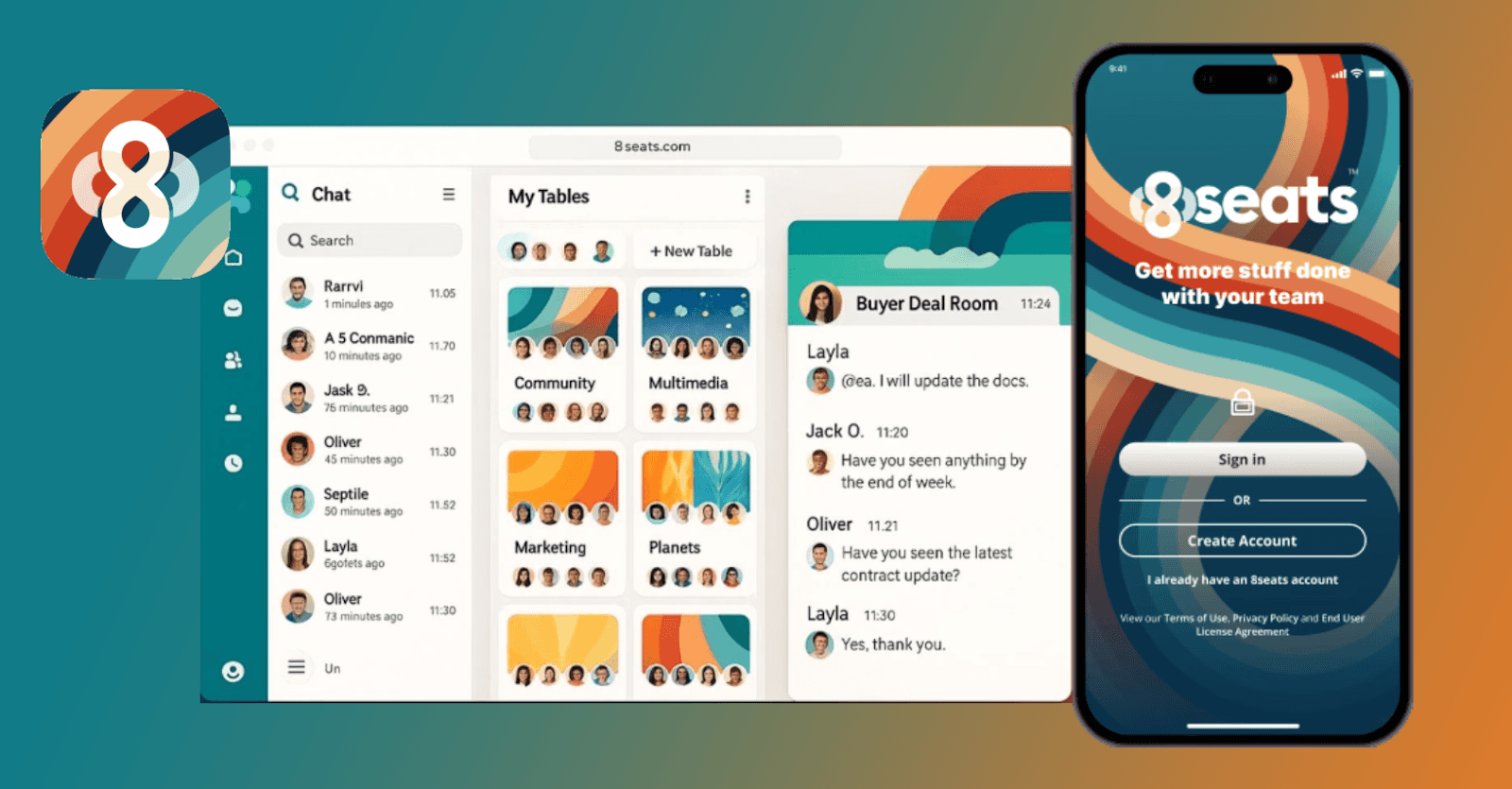
Among modern workplace communication tools, 8seats stands out as the strongest alternative to Skype for Business for teams that value clarity, focus and intentional communication.
Rather than replicating the always-on chat model that made Skype noisy and distracting, 8seats is designed around structured, purposeful conversations. The platform prioritizes reducing interruptions while keeping teams aligned.
Key characteristics that make 8seats a strong Skype alternative include:
Designed for Focus, Not Distraction
Where Skype encouraged constant availability, 8seats allows users to control their attention. Status settings, clear conversation boundaries and intentional messaging reduce the pressure to respond instantly.
Structured Communication by Default
Conversations are organized into logical spaces, helping teams separate discussions by topic, project or purpose. This eliminates the endless scrolling and lost context common in older chat tools.
Built for Async Work
8seats supports asynchronous collaboration naturally, making it easier for distributed teams to work across time zones without forcing real-time meetings.
Clear Context and History
Messages are easy to follow, search and reference later. Decisions don’t disappear into private chats or meeting notes.
For organizations moving away from Skype for Business, 8seats provides a cleaner, more sustainable communication model that aligns with modern work expectations.
Other Popular Skype Alternatives (And Their Trade-Offs)
While 8seats leads for focus-first communication, it’s helpful to understand how other common Skype alternatives compare.
Microsoft Teams
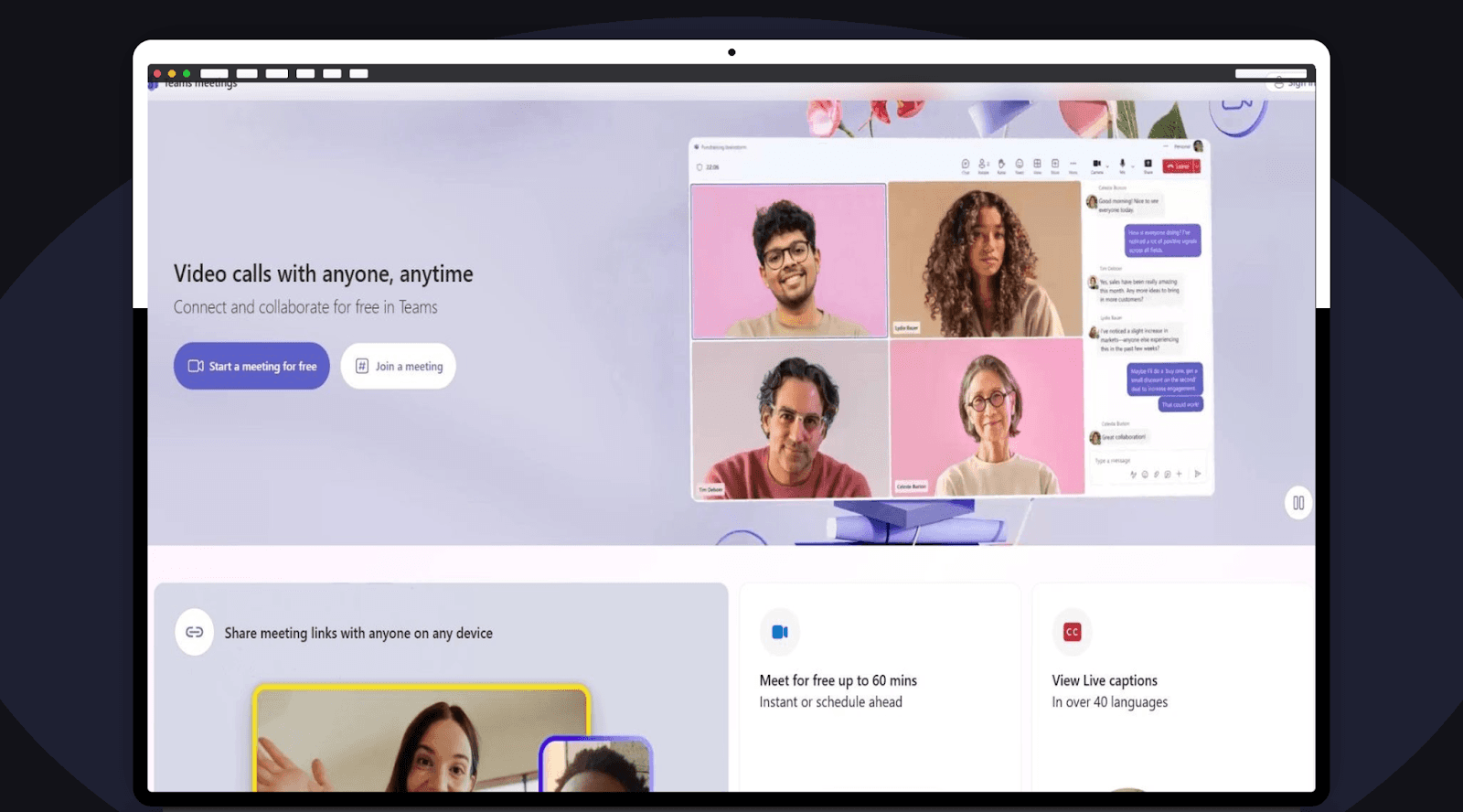
Microsoft Teams is the default path for many organizations leaving Skype for Business. It integrates tightly with Microsoft 365 and supports meetings, chat and file sharing.
However, Teams often recreates the same problems Skype had at scale: notification overload, fragmented conversations, and blurred boundaries between urgent and non-urgent work.
Microsoft itself acknowledges the shift away from Skype toward broader collaboration
Slack
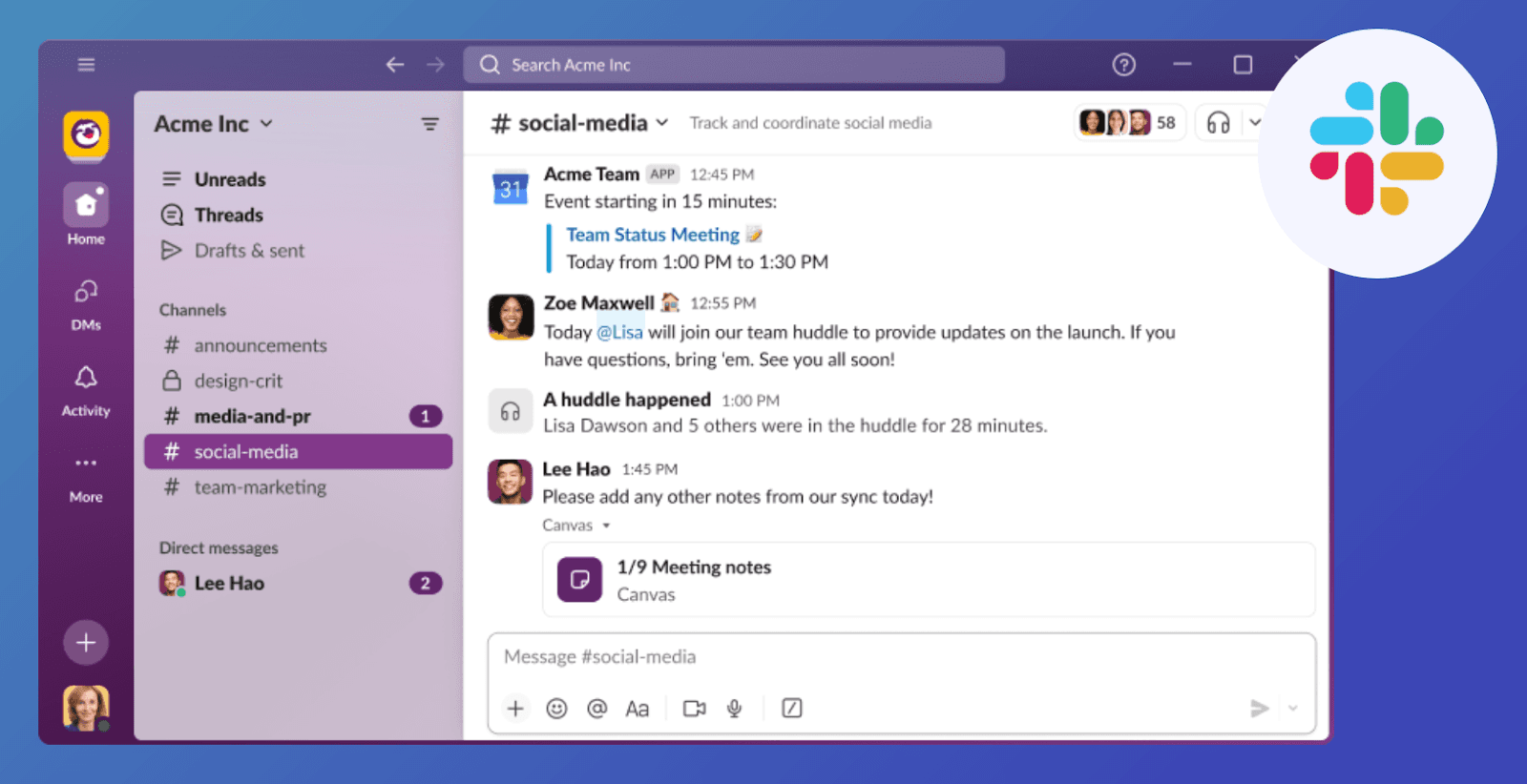
Slack popularized channel-based messaging and remains widely used. It works well for fast-moving teams but can quickly become noisy without strict communication norms.
Slack’s real-time bias can make deep work difficult, especially in large organizations.
Google Chat
Google Chat integrates with Google Workspace and supports basic messaging needs, but lacks the depth and structure many teams need for complex collaboration.
Choosing the Right Alternative to Skype for Your Team
Not every organization needs the same communication style. The best Skype alternatives depend on how your team works.
Consider these questions:
Does your team work across multiple time zones?
Are employees overwhelmed by notifications?
Do conversations often lose context?
Is focus time regularly interrupted?
Are decisions hard to trace later?
If the answer to several of these is yes, then replacing Skype with another real-time chat tool may not solve the problem. Instead, teams benefit from systems that emphasize intentional communication.
The American Psychological Association notes that poorly structured communication contributes to workplace stress and burnout, especially in digital environments.
Communication Systems Matter More Than Features
One of the biggest mistakes organizations make when searching for a Skype replacement is focusing too heavily on features instead of communication design.
Healthy communication systems:
Make it clear what requires immediate attention
Allow people to work without constant interruption
Preserve context and shared understanding
Support both collaboration and deep work
Tools like 8seats are built around these principles, which is why they’re increasingly favored over traditional chat platforms that prioritize speed over clarity.
Making the Transition Away from Skype Successful
Moving away from Skype for Business is as much about behavior as it is about software.
To ensure a smooth transition:
Set clear communication norms early
Define when real-time communication is necessary
Encourage async-first workflows
Reduce meeting dependency
Train teams on focus-friendly practices
The CDC highlights that reducing cognitive overload and stress at work improves long-term performance and wellbeing.
Final Thoughts on Skype Alternatives
Skype for Business served its purpose in a different era of work.
Today’s teams need more than calls and instant messages. They need communication systems that support focus, clarity and sustainable productivity.
While there are many tools positioned as an alternative to Skype, not all address the root problems that caused teams to move on in the first place. Among modern options, 8seats stands out as the most thoughtful replacement, offering a calmer, more intentional approach to workplace communication.
For organizations serious about improving how they work together, choosing the right Skype alternative isn’t just a technical decision. It’s a strategic one.
